儿童肥厚型心肌病 - 我们的研究再创里程碑
在今年的世界心脏日,我们大奥蒙德街儿童医院(GOSH)的研究人员为一项具有里程碑意义的研究项目带来了新的亮点。该研究首次描述了儿童期发病的肥厚型心肌病 (HCM) 的特征和症状,同时带来了如何管理该疾病的更合适的方法。
该项研究由MAX基金会,大奥蒙德街儿童医院慈善机构及英国医学研究理事会提供支持。
肥厚型心肌病(HCM)是一种最常见的遗传性心脏病。该疾病可能会导致年轻人猝死,经常能在新闻中见到此类事件- 例如运动员在比赛中突然倒地不起。
长期以来,人们一直认为这是一种主要影响青少年和成年人的疾病。然而,最近的研究表明,多达 50% 的 HCM 患儿在 12 岁之前确诊。研究显示,他们与青少年及成年人一样面临严重症状和疾病并发症的风险。
到目前为止,很少有研究去深入了解 12 岁以下儿童的早发性 HCM,以及如何更好地管理以改善这些儿童的生活。
This World Heart Day, we're shining a light on a new landmark study from researchers at Great Ormond Street Hospital (GOSH). For the first time, the study describes the characteristics and symptoms of childhood-onset hypertrophic cardiomyopathy (HCM). It also looks at ways it could be better managed.
This study was supported by Max’s Foundation, Great Ormond Street Hospital Children’s Charity and the Medical Research Council.
HCM is the most common form of genetic heart disease and is most often inherited. It can be the cause of sudden death in young adults, often making the news when athletes collapse mid-sporting match.
It has long been thought to be a disease that affects mainly adolescents and adults. However, recent studies have shown that up to 50% of children with HCM are diagnosed before the age of 12. Studies show they are as much at risk of severe symptoms and complications from the disease as adolescents and adults.
Until now, there's been little research to understand early-onset HCM in children under 12, and how best to manage it to improve these children’s lives.
"We should not exclude children from clinical trials, treatments, and new diagnostic techniques"
Associate Professor Juan Pablo Kaski, consultant paediatric cardiologist at Great Ormond Street Hospital (GOSH), and Dr Gabrielle Norrish led this new study.
They looked at the medical history and symptoms of more than 1,200 children and young people with early-onset HCM. Together with their team, they compared information from children diagnosed with HCM younger than 12 years old with children diagnosed with HCM between the ages of 12 and 16.
They found that the younger group had similar symptoms and outlook as those diagnosed older, but that children diagnosed before 12 were more likely to experience a serious cardiac event (such as a cardiac arrest or sudden cardiac death) at a younger age. Cardiac arrest is a critical medical emergency, where the heart stops pumping blood around the body. Unless treated immediately, it leads to death within minutes.
The team, based at the UCL Centre for Inherited Cardiovascular Diseases at the Zayed Centre for Research into Rare Disease in Children, also found that children diagnosed with HCM before the age of 12 were less likely to have an implantable cardioverter defibrillator (ICD) fitted.
An ICD is a small battery-powered device placed in the chest to detect and stop irregular heartbeats (arrhythmias). An ICD continuously monitors the heartbeat and delivers electric shocks, when needed, to restore a regular heart rhythm. Children with HCM under the age of 12 may benefit from interventions such as ICDs at an earlier age.
The team hopes that this research will raise more awareness among doctors of the symptoms of childhood HCM, leading to earlier diagnosis, personalised treatment plans and therefore better prognosis for children diagnosed with HCM at a very young age. The research suggests that young children who are at risk of inheriting HCM may benefit from screening to understand if they are likely to develop the condition and treatments can be started earlier. More research is needed to understand which children with HCM will be most at risk of serious cardiac events at a young age.
Associate Professor Juan Kaski says:
"...Young children are at a greater risk of death from HCM than older adults that develop the condition. The most important thing that [the research] highlights is that we should not exclude children from clinical trials, treatments, and new diagnostic techniques.
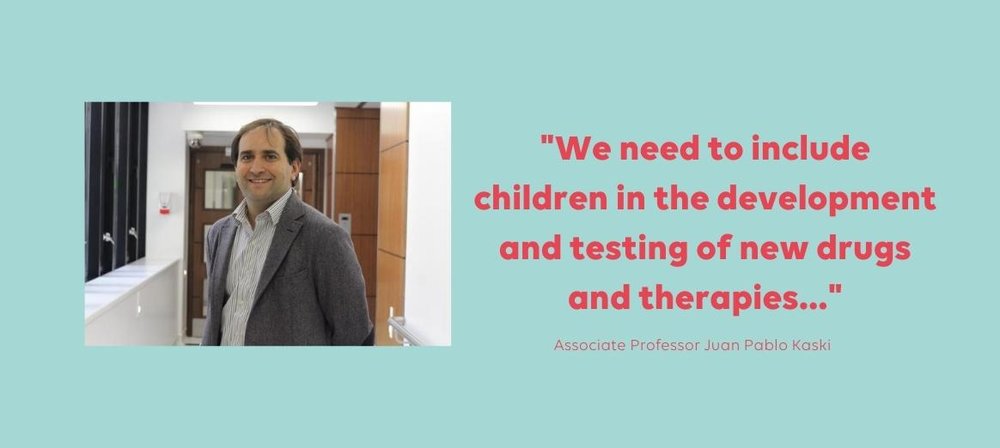
"...We need to include children in the development and testing of new drugs and therapies as many of the treatments for HCM are not available to children, even though they may be effective.”
The Centre for Inherited Cardiovascular Diseases is one of the largest centres of its kind in the world, seeing between 6,000-7,000 patients a year from across the globe. This work was supported by Max’s Foundation, Great Ormond Street Hospital Children’s Charity and the Medical Research Council. Funding for a Research Assistant was also provided by The Dinosaur Trust.

